Muštarda is a traditional Croatian condiment from Samobor, made from mustard seeds, grape must, and grape jam. It is sharp, piquant, and thick in texture — traditionally served with boiled beef, roasted meats, and sausages. Unlike regular mustard or Italian mostarda, it is a uniquely Croatian product with over 200 years of history.
Most people have never heard of muštarda. Those who have tried it never forget it. It is sharp, complex, deeply aromatic, and unlike anything you will find on a supermarket shelf. This is not a trendy new sauce — it has been sitting on Croatian tables for over two centuries, doing exactly what it has always done: making good food taste remarkable.
This article is based on available historical records, traditional sources, and regional documentation. Recipes and production methods may vary slightly between makers.
Muštarda, Mustard, and Mostarda — They Are Not the Same Thing
If you searched for muštarda and ended up confused, you are not alone. These three words look and sound so similar that even food lovers mix them up regularly. But they are three completely different things, and understanding the difference is the first step to appreciating what muštarda really is.
Regular mustard is made from ground mustard seeds mixed with vinegar, water, and salt. Sharp, tangy, comes in varieties like Dijon, English, or American yellow. Simple, seed-based, no fruit involved.
Mostarda is an Italian specialty from Cremona in northern Italy. It is candied fruit — pears, cherries, figs, apricots — preserved in a sugar syrup infused with mustard essence. Sweet, sticky, and pungent all at once, closer to a spiced fruit preserve. Traditionally served with boiled meats and aged cheeses.
Muštarda is neither of these. It is a thick, dark, intensely piquant paste from Samobor, Croatia — made from mustard seeds, grape must, grape jam, and spices. No candied fruit, no Italian influence. Its own thing entirely.
The reason all three share a similar name goes back to the Latin word mustum, meaning grape must. It evolved differently across Europe — mustard in English, moutarde in French, mostarda in Italian, muštarda in Croatian. Same root, three entirely different products.
The Origins of Samoborska Muštarda
Samobor is a small city about 25 kilometers west of Zagreb. It is the kind of place where old recipes do not die — they get passed down, protected, and quietly perfected over generations.
Muštarda arrived in Samobor during the French occupation of the region between 1808 and 1812. The French soldiers and administrators who settled in the area brought their culinary habits with them, and locals adapted what they learned using ingredients available to them — mustard seeds, grape must from local vineyards, and spices. What emerged was something uniquely Croatian, no longer French in character but born from that exchange.
By the mid-19th century, muštarda had become inseparable from Samobor’s identity. It was not just a condiment — it was part of how the city ate, celebrated, and welcomed guests.
The Filipec Family Legacy
No conversation about muštarda is complete without the Filipec family. They are one of the oldest families in Samobor and have been producing both muštarda and bermet — the city’s famous aromatized wine — for more than two centuries.
Their cellar, Podrumi Philipecz, sits in the heart of Samobor’s town center and remains the most recognized name in authentic muštarda production. The recipe has been passed from one generation to the next, largely unchanged, and remains a closely guarded family secret.
What makes their muštarda stand out is not just the recipe — it is the process. Everything is made by hand, in small batches, without shortcuts. You can buy it in 220g or 350g jars, and it is one of Samobor’s most sought-after gastronomic souvenirs.
What’s Inside: Ingredients and Flavor Profile
Samoborska muštarda is built on a short list of ingredients — mustard seeds, sweet wine must, grape jam, salt, and sugar. That simplicity is deceptive, because the flavor it produces is anything but simple.
The first thing you notice is the heat. Not a slow burn but an immediate, assertive sharpness that hits the back of the nose — closer to horseradish than to the mustard you are used to. Behind that sharpness sits a deep fruitiness from the grape must and jam, which softens the edge without eliminating it. There are also subtle spice undertones — peppery, slightly earthy — that give it a complexity most condiments lack.
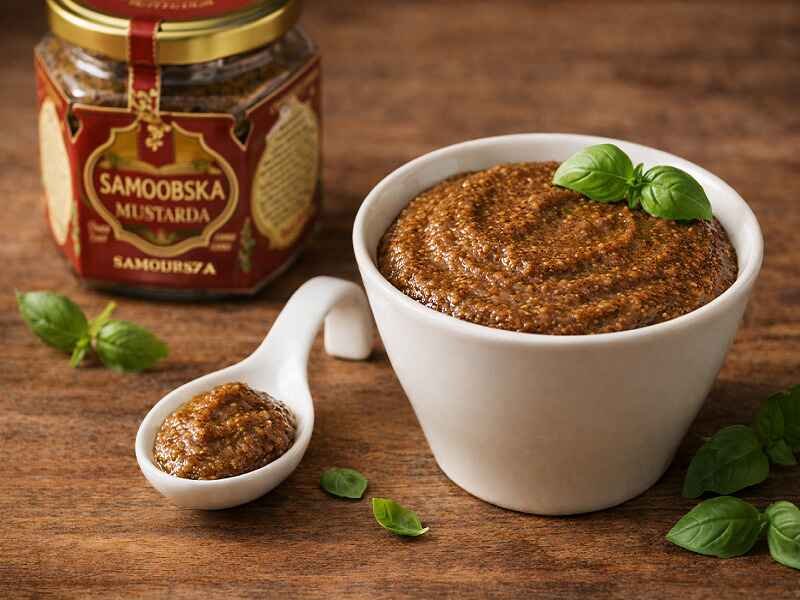
The texture is thick and paste-like, dark in color, and spreads easily. A little goes a long way.
How Muštarda Is Made
Traditional muštarda production starts with mustard seeds that are ground and then combined with cooked grape must and grape jam. The mixture is worked together until it reaches the right consistency — thick, smooth, and cohesive.
Unlike many condiments that are simply mixed and bottled, muštarda requires time. The ingredients need to settle and meld together, allowing the sharpness of the mustard to fully absorb into the sweetness of the grape base. The result is a paste where no single ingredient overpowers another — everything is in balance.
It is then packed into glass jars and sealed. No preservatives, no artificial additions. The natural acidity and sugar content do the preservation work.
What to Eat With Muštarda
Muštarda was built for meat. Boiled beef is the classic pairing — the richness of slow-cooked beef and the sharp punch of muštarda work against each other in exactly the right way. Roasted pork, grilled sausages, and cold cuts all fall into the same category.
Češnjovka — Samobor’s traditional garlic sausage — is perhaps the most iconic local pairing. The two are practically inseparable in Croatian food culture, served together at family gatherings and local restaurants throughout the region.
Beyond meat, muštarda works well alongside strong aged cheeses, where its fruitiness complements the salt and depth of a well-aged hard cheese. It can also be used as a glaze for roasted meats or stirred into sauces for an unexpected layer of flavor.
Where to Buy Authentic Muštarda
The most direct way to get genuine Samoborska muštarda is to visit Samobor itself. Podrumi Philipecz in the town center is the go-to source, and buying it there comes with the full experience of the place it comes from.
For those outside Croatia, the Filipec family ships internationally through their website at bermetfilipec.hr. The 220g and 350g jars are both available, and the 350g is worth it if you plan to use it regularly.
When buying from other sources, check the label carefully. Authentic Samoborska muštarda will list mustard seeds, grape must, and grape jam as primary ingredients. Anything with a significantly different ingredient list is likely a generic imitation.
FAQs
It is primarily used as a condiment for boiled and roasted meats, sausages, and aged cheeses. It can also be used as a glaze or stirred into sauces.
It is sharper and more complex than regular mustard, with a deep fruity undertone from the grape must. The heat is more immediate and pronounced.
No. Italian mostarda is a candied fruit preserve with mustard essence. Muštarda is a thick mustard paste made with grape must and grape jam. Different ingredients, different texture, different culinary tradition.
Unopened jars have a long shelf life due to the natural preserving properties of vinegar and sugar. Once opened, refrigerate and use within a few weeks for best flavor.
It originates from Samobor, Croatia, where it has been produced traditionally for over 200 years.