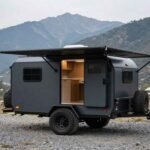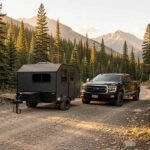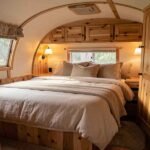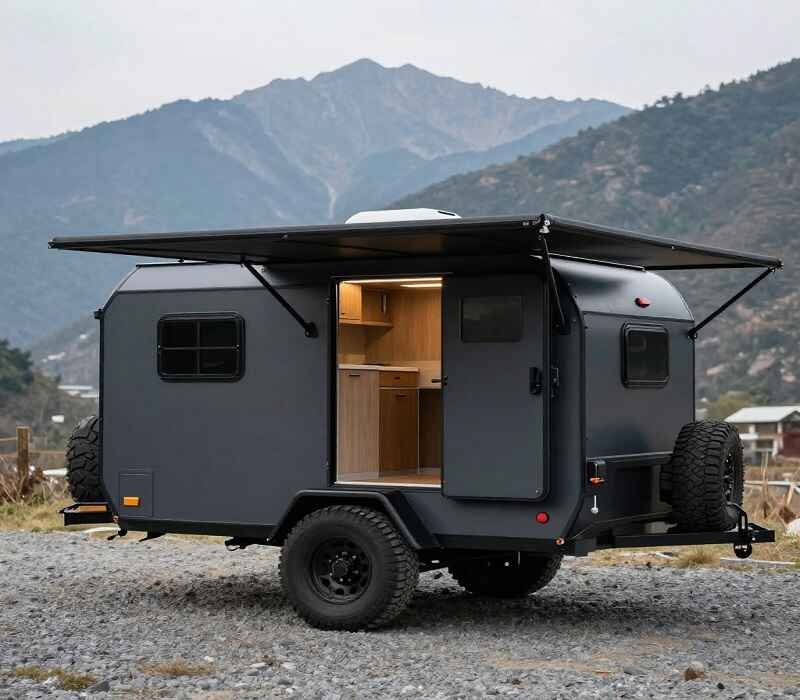
Hiker Trailer is a US-made custom square drop camper starting at $4,999, genuinely capable off-road and more affordable than most competitors, but with inconsistent quality control and build timelines that regularly run longer than promised.
Thousands of people have ordered one. A few regret it. Most do not. The difference almost always comes down to whether they knew what they were getting into before the deposit cleared. This review covers what the website does not tell you real owner experiences, documented quality issues, the weight problem nobody warns you about, and whether the value is actually there once you build it out the way most people do.
What Makes Hiker Trailer Different From Other Campers
Hiker Trailer is not competing with Airstream or Lance. It occupies a very specific space — a hand-built, fully customizable square drop trailer made in Columbus, Indiana, priced low enough that a first-time buyer can realistically afford one without financing. That positioning is intentional, and it explains nearly everything about both the appeal and the limitations of the product.
The frame is steel, the exterior is aluminum mechanically fastened to a plywood body, and every trailer is built to order. No two units are identical. The company has been operating for over ten years with more than 4,000 trailers on the road across five models, Highway Lite, Highway Deluxe, Mid Range, Mid Range XL, and Extreme Off Road, ranging from $4,999 to $16,999 at base before customizations.
What draws people to Hiker is the combination of off-road capability and price that competing brands simply do not match. A Timberleaf with comparable off-road specs costs 20 to 30 percent more. A custom van build costs multiples more. Hiker fills the gap between serious overlanding gear and what most people can actually spend, and that is why the waitlists exist and the Reddit threads keep growing.
Why Is Hiker Trailer So Much Cheaper Than the Competition?
This is the first question most buyers ask, and it is a fair one. The short answer is that Hiker keeps costs down by simplifying the build — and being transparent about it.
The body is plywood covered with aluminum sheet metal. There is no insulation in the standard build. There is no factory-installed kitchen, no built-in plumbing unless you add it, and no luxury finishes.
One Reddit user who builds square drops himself noted he cannot match Hiker’s base unit price with the materials available to him, which says something about how efficiently they are sourcing and building.
The other factor is the business model. Hiker is not running a dealership network with middlemen and showroom overhead. You order directly, they build it, and you either pick it up in Columbus, Indiana or pay for delivery. What you are paying for is the frame, the shell, the axle, the wiring, and the assembly, everything else is priced as a separate addition.
Which Size Should You Get: 5×8, 5×9, or 5×10?
This is the decision most buyers underestimate, and it is worth getting right before placing an order because changing it later is expensive.
The 5×8 is the most compact option. A standard queen mattress fits from wall to wall with no extra floor space, which means shoes, gear, and anything else you want inside the cabin have nowhere to go. One owner who is 6 feet tall reported fitting comfortably length-wise, but noted that two adults plus dogs in a 5×8 is genuinely tight.
If budget is the primary driver and you camp solo or light, it works. If you have a partner and any gear to store inside, the walls close in fast.
The 5×9 is where most buyers land. The extra foot adds meaningful interior room without a significant jump in weight or price. A queen mattress fits with room at the foot end — enough for boots, a bag, or a dog. Owners at 5’11” to 6’0″ report comfortable sleeping without feeling cramped.
The 5×9 also opens up deeper galley shelf options, which matters if you plan to run a portable fridge or larger cooler.
The 5×10 is the choice for taller campers, couples who want more than just a sleeping space, or anyone planning extended trips. The consistent advice from owners: go one size bigger than you think you need. The price difference at order time is small. The regret of going too small shows up on every trip afterward.
Must-Have Accessories — What Owners Actually Recommend
Hiker’s configurator has hundreds of options. Across years of owner feedback, the same short list comes up every time.
The MaxxFan roof vent is universally recommended without exception. It manages heat, ventilation, and condensation in a way cracked windows cannot. Multiple owners described it as the single most important upgrade on the entire trailer.
The lock-and-roll articulating hitch consistently ranks second. It allows the trailer to move independently from the tow vehicle on rough terrain, owners who added it after delivery consistently said they should have ordered it from the start.
The second door is straightforward. If you camp with another person, climbing over them at night is a problem that disappears with a second door. Owners who skipped it and added it later paid significantly more than ordering upfront.
Roof racks matter for anyone planning a rooftop tent, 270-degree awning, or gear on top. Factory installation is cheaper and cleaner than retrofitting. A front toolbox or tongue-mounted storage also helps with weight distribution and towing stability.
The Weight Problem Nobody Warns You About
Every model has a listed dry weight. The Extreme Off Road is listed at approximately 1,350 pounds, accurate for the base trailer. The problem is that most buyers do not order the base trailer.
One owner picked up a fully optioned Extreme Off Road and was told at delivery the actual weight was 2,500 pounds dry, nearly double the listed spec. They had planned to tow with a Jeep rated at 3,500 pounds. With gear, water, and a rooftop tent loaded, they were already at the limit of a vehicle chosen based on the advertised base weight.
The configurator does not display running weight estimates as options are added, which leaves buyers responsible for tracking this themselves. The practical approach: total the base weight plus estimated weights for every option, then add gear and water. Compare that against your vehicle’s rated tow capacity with a 20 percent safety margin.
Quality Control — The Honest Picture
The most detailed owner account comes from a verified buyer who picked up a fully optioned 5×9 off-road model after a ten-hour drive. Back home, they found eleven of twenty-four roof rack screws loose or barely threaded, three snapped off when hand-tightened. The rear door had a water leak from a sealant gap around the license plate holder. The fridge box was mounted upside down.
A missing fuse meant the water system did not work at all. When the fuse was installed, the pump sprayed water across the galley because every hose elbow was undersized for the tubing used. This came after a delivery that ran four months past the original promised date.
Other owners reported caulking gaps, door alignment problems, missing screws in door frames, sharp aluminum edges, and roof racks installed slightly off. One owner had a shock blow out on the highway drive home from the factory.
The structural elements hold up. The finishing work shows signs of being rushed as production volume has scaled. Customer service response is generally positive, the company acknowledges issues and ships warranty parts, but resolving problems after pickup is a different experience than catching them before you leave.
If you are also evaluating how a similar small custom builder handles credibility and transparency, this breakdown of whether Mike’s Pretty Good Campers is legit covers what to look for.
Towing With Smaller Vehicles — What Actually Works
The Highway Lite and Highway Deluxe in base or lightly optioned form are manageable behind smaller vehicles. Owners have towed with a RAV4, Subaru Crosstrek, and Outback without issue on highway and moderate dirt roads. The key is keeping loaded weight within the vehicle’s rated capacity, not just at the limit.
The Mid Range and above are a different situation. Dry weights climb fast with options and loaded gear. Mid-size trucks or larger SUVs are the practical minimum. For the Extreme Off Road, with real-world fully optioned weight reaching 2,500 pounds dry, a full-size truck is the baseline, not an upgrade.
Long-Term Ownership — What Owners Say After the Honeymoon Period
Structural durability holds up. Owners with 5,000 to 16,000 miles on their trailers report no frame issues, no body damage, and no major mechanical failures. The aluminum exterior has not delaminated. The steel frame has not flexed or cracked.
Sealant around windows and the roof vent needs annual inspection and resealing owners who stay on top of this have no water intrusion issues. The trailer holds resale value well, which reflects sustained demand in the used market.
The long-term complaints follow the same pattern as initial ones: QC issues at pickup, timelines that stretched past what was promised, and post-purchase support that is largely self-directed.
Pre-Delivery Inspection — What to Check Before You Drive Away
Budget at least an hour at pickup. Check every roof rack bolt by hand. Test every door lock. Examine all sealant lines around windows, the roof vent, the license plate area, and panel joins. If you ordered a water system, fill the tank and run the pump before leaving, check every hose connection for leaks. Verify correct fuses are installed for every circuit. Confirm a fridge box is mounted right-side up. Test all lights. Inspect axle and wheel lugs.
If anything is wrong, get it fixed before you leave. The staff in Columbus are helpful, the problem is the drive home that makes in-person fixes impossible afterward.
FAQ
Is Hiker Trailer worth buying?
For buyers who want off-road capable camping at a price most competitors cannot match and are comfortable with a custom build process and self-directed ownership, yes. For buyers who want a polished product with dealer support, there are better-suited options.
How long does a Hiker Trailer last?
Based on owner accounts, the structural build holds up well over thousands of miles when basic maintenance is kept up. Sealant upkeep is the primary ongoing requirement.
Can I add options after delivery?
Most electrical, power, and exterior additions can be retrofitted. Some additional doors, specific mounting configurations are easier and cheaper to include at the time of build.
What is the biggest complaint about Hiker Trailer?
Delivery timelines and QC inconsistency are the two most cited issues across owner communities.
How does Hiker Trailer compare to Runaway Trailers?
Runaway uses an all-aluminum framework preferred by some for corrosion resistance. Hiker wins on customization flexibility and base pricing. Runaway appeals to buyers who prioritize build material quality over configuration options.
Final Verdict
Hiker Trailer delivers on its core promise: a capable, customizable, off-road-ready compact trailer at a price the competition struggles to match. Structural durability over time is real. Off-road performance on the Mid Range and above is genuine.
The limitations are equally real. Quality control is inconsistent at delivery. Build timelines slip. Post-purchase support puts most responsibility back on the owner. Real-world weight with a full option build can be significantly higher than the base spec suggests.
For the buyer who goes in informed and prepared to inspect thoroughly at pickup, Hiker Trailer is a solid purchase. For the buyer expecting a turnkey product with reliable timelines and dealer-level support, the experience is likely to disappoint. For a broader look at how Hiker fits against other compact camper options, our complete Hiker Trailer guide covers every model and pricing in detail.
This review is based on publicly available owner accounts and manufacturer information, verify current details directly with Hiker Trailer before purchasing.